

How to Build a 13-Week Cash Flow Forecast (Step by Step)
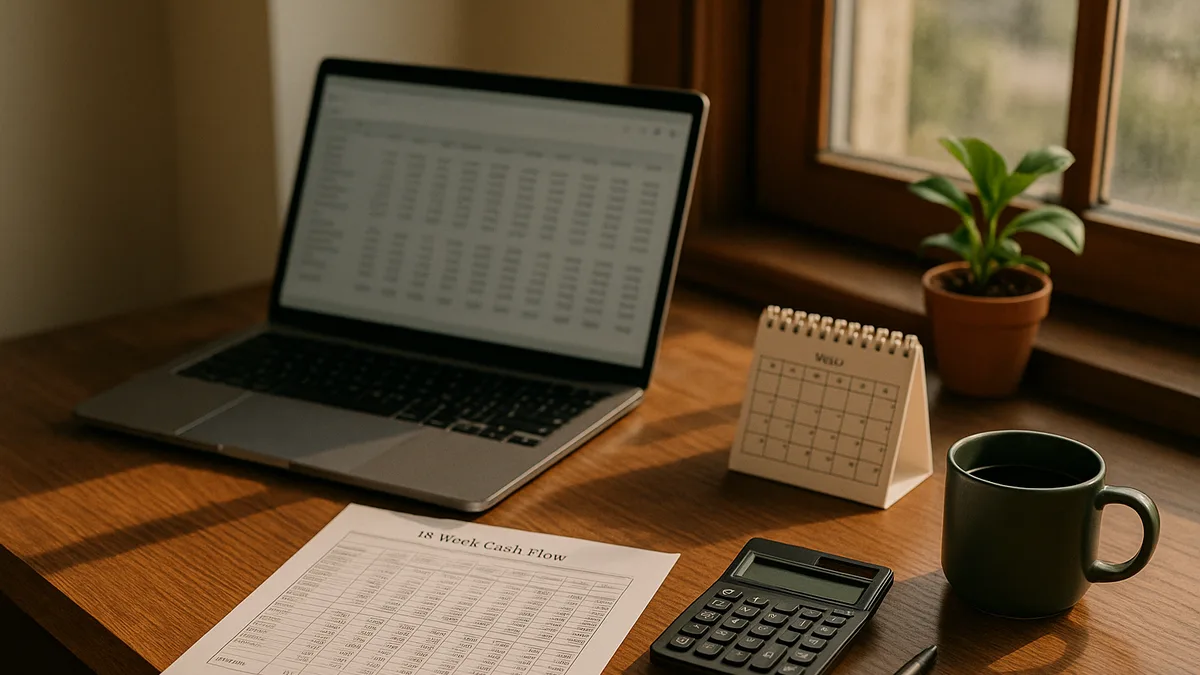
A 13-week cash flow forecast covers one fiscal quarter, broken into weekly increments instead of monthly ones. That granularity is why lenders, turnaround advisors and boards ask for it specifically during a cash-tight stretch: a monthly forecast can hide a week where the account actually runs dry, and 13 weeks is short enough to build with real accuracy while still covering a full quarter.
The structure is the same regardless of the business behind it. Start with the actual cash balance in the bank today — not a projected number, the real one. Add expected cash in for each of the next 13 weeks: customer payments, loan draws, any other inflows, sourced from invoices and known payment terms rather than revenue booked on the P&L. Then list expected cash out for each week — payroll, rent, loan payments, supplier bills, taxes — again on the week it will actually clear, not the week the expense was incurred.
Each week's ending balance becomes the next week's starting balance, rolled forward across all 13 weeks. That roll-forward is where a forecast built in a spreadsheet usually breaks down — someone has to remember to update every week, and one missed update makes every following week wrong. It's also the step most worth automating, since the forecast's whole value depends on it staying current.
This is the part Finmap replaces the manual update for: it pulls in actual transactions from connected accounts as they clear, so the weeks that have already happened are filled in with real data instead of last week's guess, and only the remaining weeks stay projected. The business's money stays in its own bank account throughout — Finmap reads transaction data, it doesn't hold or move funds.
A downloadable starting point is available as the 13-week cash flow forecast template. Once a business is ready to keep it updated automatically rather than by hand, Finmap's Lite plan ($25/month, up to 600 transactions a month) covers most businesses running this exercise for the first time.