

Table of Contents

373

8 min

29.07.2026
From prototype to series: how to count the money when production grows tenfold

Karine Shevchenko
Financial Expert at Finmap
At the prototype stage, finances are simple. A handful of units, a handful of suppliers, everything lives in your head and one spreadsheet. You know every number personally, and that's enough.
Then a series contract comes in, and production has to be ramped up tenfold. And that's when it turns out the old bookkeeping can't hold it. There aren't a few purchases anymore but dozens, the team has grown, money goes out upfront in bigger sums — and decisions are still made "by feel," because the spreadsheet can't keep up with the growth.
Scaling doesn't break production — you've actually got that dialed in. It breaks the way you count the money. And if you don't rebuild your bookkeeping ahead of time, growth turns into chaos in which it's easy to go into the red even with a good contract.
Why scaling breaks the old bookkeeping
What worked on the prototype stops working on the series — not because the bookkeeping is bad, but because scale changes the task itself.
| On the prototype | On the series |
|---|---|
| A few purchases, all in your head | Dozens of purchases, deadlines and prepayments overlap |
| Money upfront — small amounts | Money upfront — sums that wreck your cash without a plan |
| Unit cost "roughly" | Rough unit cost on a series is real losses |
While the scale is small, inaccuracy is cheap. On a series, every small error gets multiplied by volume: understated unit cost, an unnoticed prepayment, unplanned capacity. "We grew, but it got harder than before" — that's the typical feeling when the bookkeeping wasn't rebuilt for the new scale.
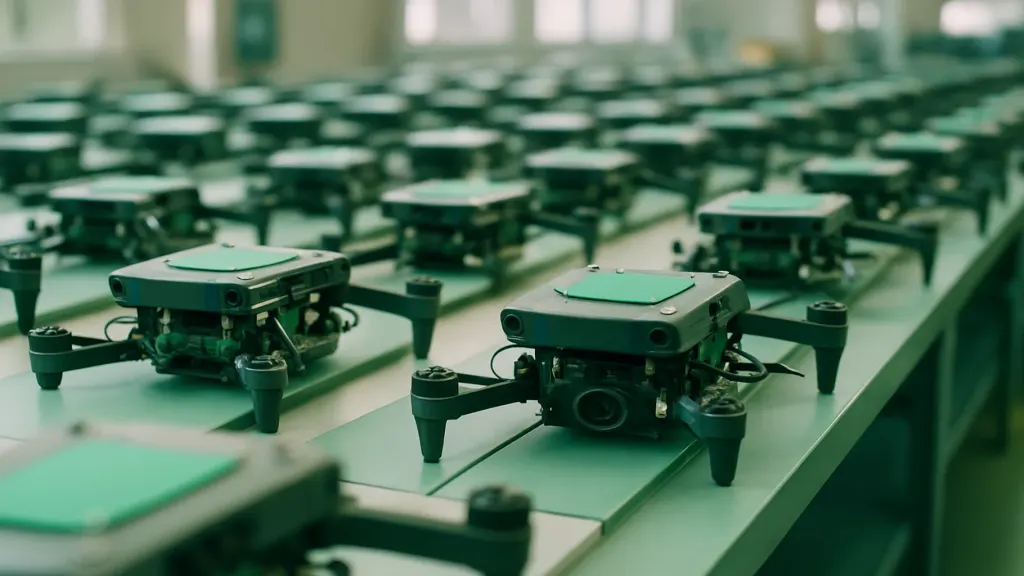
"We thought the main challenge of the series would be production. It turned out the hardest part wasn't assembling the drones but managing to count the money at a pace that had grown tenfold. The old spreadsheet just fell apart."
What changes at tenfold growth
Growth in volume drags financial complexity along with it — and that's exactly what you need to plan ahead:
- The cash flow is bigger and tighter. More spending upfront means a bigger gap between production and payment.
- Unit cost has to be accurate. On a series, an error of a few percent is already real money, not a rounding error.
- Capacity has to be planned to the number. How many people, how much equipment and turnover you need to pull off the volume — that's a financial question, not just a production one.
- Decisions run on a model, not on feel. At this pace intuition can no longer keep up; you need a forecast.
What to count ahead of time
So growth doesn't turn into chaos, you need to approach the series with a financial model, not a prototype spreadsheet:
- A cash-flow forecast for the new volume — to see where and when cash will sag as you grow.
- Accurate unit cost of the series product — from components to hours and capacity, not "like on the prototype."
- A capacity and hiring plan — how many resources you need to buy in to pull off the pace, and whether the turnover will cover it.
- What-if scenarios — what happens to the money if payment is delayed or volume grows even more.
"When we built a financial model for the series, it became clear that what we lacked wasn't hands but working capital for certain weeks. We prepared in advance — and the growth went through without any fire drills."

Why you need a financier here
Rebuilding your bookkeeping for scale and putting together a growth model on your own is hard — the owner at this moment is fully buried in the operations of the series. A financier builds a financial model for the new volume: cash flow, unit cost, capacity and scenarios — so that growth decisions are made on the numbers, not blindly.
For a model like that to rest on real data, the bookkeeping has to be in one place and scale together with production. In Finmap you can see the cash flow, unit cost per product and spending by area — and you can build a financial model for the series on actual numbers, not on a spreadsheet that's falling apart.
📌 Get your finances ready for growth before it turns into chaos. Book a free financial diagnostic with Finmap — a financier will put together a model for the move from prototype to series and show you where cash will sag as you grow. No obligations.
Share valuable content — become a source of insights




Frequently asked questions
Why doesn't prototype bookkeeping work on a series?

Because scale changes the task. A few purchases can be kept in your head, dozens can't: deadlines and prepayments overlap, upfront money becomes large sums, and rough unit cost starts costing real money. A spreadsheet that worked on the prototype can't keep up with the pace of the series.
What should you count first when moving to a series?
The cash flow for the new volume and the accurate unit cost of the series product. This is exactly where the main risks hide: the gap between upfront spending and payment, and understated margin multiplied by volume. Then comes the capacity plan and what-if scenarios.
Why does unit cost matter more on a series than on a prototype?
Because any inaccuracy gets multiplied by volume. An error of a few percent on a single unit is invisible, but on a series of thousands it's already substantial losses. That's why before the series you have to recalculate unit cost precisely, not carry the estimate over from the prototype.
Is scaling a production task or a financial one?
Both. The production part is usually worked out first. But how much working capital, how many people and how much equipment you need to pull off the volume, and whether cash will cover the peak weeks — those are financial questions, and they're the ones that most often become the bottleneck.
Why do you need what-if scenarios during growth?
Because at a high pace a payment delay or extra volume hits cash harder. Scenarios show what happens to the money under different options and let you prepare in advance, rather than react to a crisis once it's already here.
Any questions left?
We are ready to answer them.


Finmap support