


Table of Contents

110

9 min

02.06.2025
From chaos to growth: 5 steps to a more efficient business

Olena Smolikova
Financial expert at Finmap
In business, there’s no perfect moment to make a change. But there are smart decisions — and they’re what separate companies that grow from those that stand still.
Want this year to become a real turning point for your business? Then don’t wait for the ideal moment — act now.
In this article, you’ll find 5 proven steps to get organized, increase efficiency, and move your business forward — without burnout or chaos.
1. Build a solid foundation for a new strategy
Before setting new goals, look at what worked in the past. Which parts of your previous plan were actually put into action? Which results truly moved the business forward? And where did you lose money, make mistakes, or simply rely on wishful thinking?
To do this properly, review the year: financially, operationally, and strategically. We’ve put together a step-by-step guide on how to prepare and analyze reports — with examples and explainer videos.
The next step is to involve your team. Hold a brainstorm: let everyone share their perspective, challenges, and ideas. This isn’t just “collecting opinions” — it’s a chance to see the business from different angles and get people invested in a shared result.
Don’t limit creativity — sometimes an unconventional idea becomes a real competitive advantage. In the end, you’ll have an updated business plan based on data and your team’s real experience.
2. Free your business from routine — automate processes
Repetitive day-to-day tasks drain not only time, but energy too. In the end, the team is running at full capacity while strategic priorities keep getting pushed back. Sound familiar?
Automation helps you regain control. What used to take hours can now be done in a few clicks — or without your involvement at all. For example:
- Do customers keep asking the same questions? Set up an AI bot.
- Struggling to track payments and expenses? Set up automatic imports and reports.
- Sending the same invoices every month? Turn on automatic invoice generation.
Repetitive actions should be the first things you delegate to systems.
That way, you save time, reduce errors — and most importantly, create space for growth.

3. Turn marketing into an asset, not an expense
What worked last year may no longer bring results today. Marketing changes faster than you can update your banners. That’s why it’s important not to stay stuck in the past — test new formats, experiment, and keep an eye on what’s changing.
Here are a few directions worth your attention right now:
- AI in action
Chatbots? Yes. But not only that. AI can help create copy, adapt ads to user behavior, and even predict what’s likely to work. The sooner you implement it, the bigger your advantage.
- Interactivity is the new standard
Video alone isn’t enough. Get the customer involved: quizzes, polls, calculators, gamification. It’s not a distraction — it’s selling through experience.
- Transparency = strength
Brands that share their values attract people. Support volunteers? Plant trees? Help the Armed Forces? Don’t stay silent. Just remember: the action needs to be genuine — not just for show.
- User-generated content (UGC)
Photos with your product, social media stories, honest reviews — these signals are stronger than any marketing slogan. Create the conditions for people to want to share their experience.
- Brand voice = your differentiator
Tone, language, and communication style are part of your competitive advantage. If your brand sounds human and authentic, people will remember it.
- Micro-influencers + local opinion leaders
You don’t always need celebrities. Local and micro-influencers often have a stronger connection with your audience. Work with people who are truly trusted in your niche or region — the results may surprise you.
Don’t chase every trend — choose the ones that make sense for your business. But the main thing is: don’t ignore change. Marketing that doesn’t evolve quickly becomes just another cost — with no return.
4. Expand your portfolio strategically
Adding new products or services is one of the most effective ways to scale your business. If you do it at the right time and base it on market demand, it can bring several benefits:
- Attract new customers — a broader offer opens the door to a new audience.
- Increase the average order value — existing customers buy more when they have options.
- Build loyalty — when your business grows alongside the customer and delivers new value, it builds trust.
- Competitive advantage — your differentiator isn’t just the price, but the full package.
- Risk diversification — less dependence on a single revenue stream = more stability.
But expansion only makes sense if it’s well thought out.
Start with an analysis: which needs are still unmet? Is there demand? What’s the potential margin?
Write a strategy: who this service is for, how it fits into your business model, and what team and resources you’ll need. Only then should you move into execution.
Scaling strategically isn’t about the number of services you offer, but the quality of the decisions behind them.
5. Money doesn’t run on guesswork — implement a systematic approach to financial management
A business can’t grow steadily without transparent financial control. If you still make financial decisions by instinct or by looking only at your bank balance, that’s not management — it’s guesswork. And in the long run, it always puts you at risk of losses.

Regular financial management helps you spot weak points, avoid cash gaps, and make better-informed management decisions. Here’s how to get started:
Step 1. Master the basics of management accounting
Even if you have an accountant or CFO, as the business owner, you need to understand the essentials. This is crucial for strategic control:
- how management accounting works;
- what P&L, Cash Flow, and Balance Sheet reports are, and how to analyze them;
- the difference between cash and accrual accounting — and which one applies to your business;
- how to plan expenses and income for the next month or quarter.
Common mistake — trying to manage finances manually in Excel. Wrong formulas, no clear owner, lost data — all of this leads to inaccuracies and losses.

Step 2. Automate financial processes
To save time, avoid mistakes, and get accurate financial data without delays, it’s worth automating your financial management.
Finmap lets you connect bank accounts so all money coming in and going out is imported automatically. But automation doesn’t stop there.
The next level is automatic processing rules (auto-rules):
The system analyzes transaction comments and classifies them by category, project, supplier, and department.
As a result, reports are generated automatically and are available to you anywhere, anytime.
Finmap AI Copilot: intelligence that works for your finances
At the end of this automation chain is Finmap AI Copilot — an AI tool that doesn’t just show you the numbers, but turns them into decisions.
Finmap AI Copilot automatically generates a detailed report based on your financial data. Inside, you’ll find:
- key metrics in a clear format;
- alerts about potential risks: from declining profitability to cash gap risks;
- personalized recommendations: how to optimize expenses, improve cash flow, or adjust your financial model.
It’s like having a personal financial analyst working 24/7 with your real business data — not assumptions.
Step 3. Plan, don’t just record
Your account balance is not profit — and without factoring in future obligations, it can create a false sense of stability.
To see the full picture, financial planning is essential.
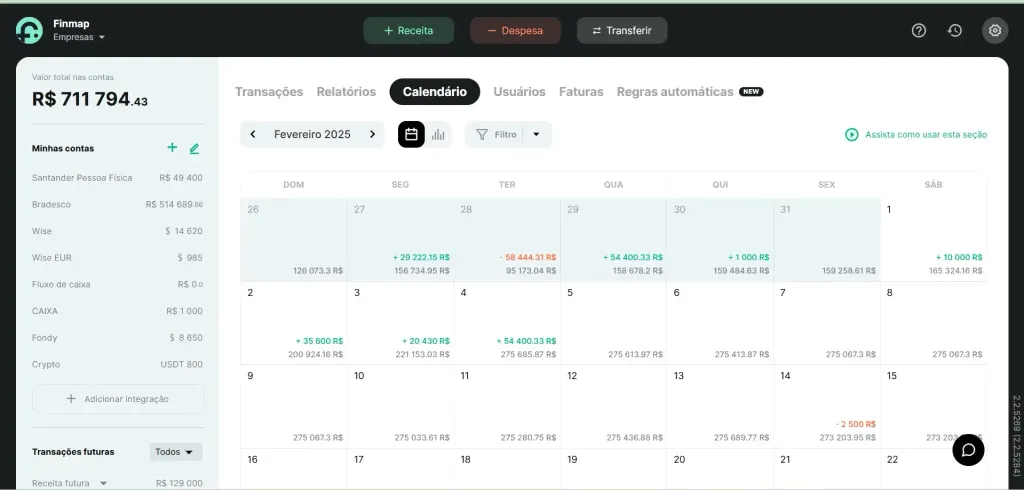
That’s where Finmap’s payment calendar comes in — a tool that moves your financial management from reactive mode to strategic mode.
With the payment calendar, you can:
- forecast future expenses and income;
- anticipate cash shortages;
- build reserves for critical expenses;
- understand how much you can actually invest or withdraw;
- plan profit based on data, not gut feeling;
- stop living from one transaction to the next.
The calendar connects your current balances with your future obligations — and that’s where real financial control begins.
Efficiency isn’t a one-time leap — it’s ongoing work on yourself, your team, and your processes.
The 5 steps you’ve just read can transform your business’s financial stability. But to make those changes real, you need a tool that lets you manage finances without chaos.
Finmap is management accounting, automation, planning, and artificial intelligence — all in one solution.
Start now — take control of your finances. Because that’s where stability and growth begin.
Share valuable content — become a source of insights