

Table of Contents

887

10 min

17.06.2026
4,800 Covers, ₴47K Loss: Why Restaurants Can't Feel Their Break-Even Point

Sergiy Shuldik
Financial Expert at Finmap
"We served four thousand eight hundred people last month. The room was full almost every Friday. And we ended the month ₴47,000 in the red. I don't understand how."
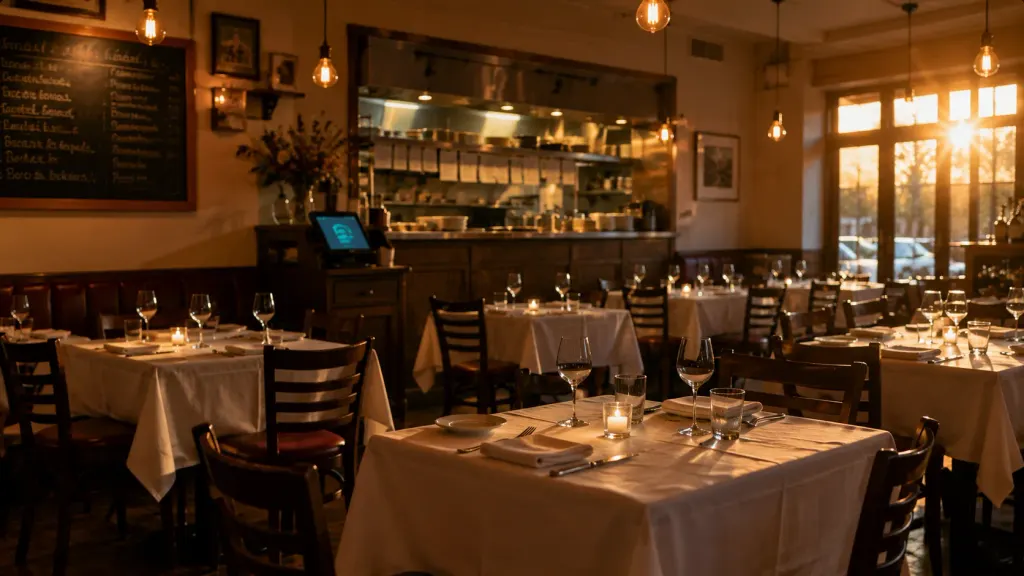
It was a Sunday night, end of month. The owner of a 50-seat neighborhood restaurant — Ukrainian and European cuisine, two-year-old concept, modest but loyal regulars — was looking at the monthly report his accountant had just sent over.
Revenue: ₴1,824,000. About 4,800 guests served across the month. Average check: ₴380. By any measure of a restaurant that's "doing fine," these were healthy numbers.
The bottom line was −₴47,000.
The owner stared at the report. He could not point to a single thing that had gone wrong. No food disaster. No staff crisis. Wedding catering brought in extra revenue mid-month. Saturdays were almost full. So how was the month negative?
This is the story of a number most restaurant owners never calculate properly — the break-even point — and what changed in this restaurant the moment its owner finally did.
The Paradox: Traffic Is Not Profit
A restaurant feels successful when the room is full, the kitchen is busy, and tickets keep coming. The owner's gut measures days by "energy" — how loud, how fast, how many regulars they recognize.
But energy is not a profit signal. A restaurant can be busy every Friday and still lose money every month if it does not understand the relationship between three numbers:
- Fixed costs — what the restaurant spends every month regardless of how many guests come (rent, salaries, utilities baseline, accountant, insurance, subscriptions, equipment leases).
- Variable cost per guest — what each individual cover actually costs to serve (food, drink, dishwasher chemicals, single-use items, payment processing fees).
- Average check — what each guest actually pays.
When you subtract the variable cost from the average check, you get the contribution margin per guest — the actual money each cover puts toward paying down fixed costs.
When you divide your fixed costs by that contribution margin, you get the break-even number of covers — the exact volume below which the restaurant loses money, and above which it earns it.
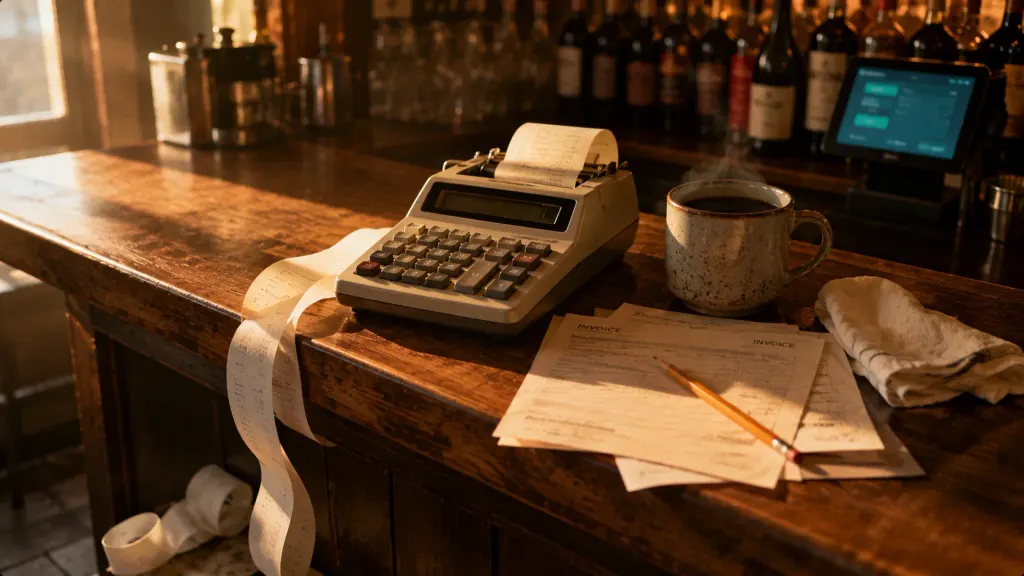
Most restaurant owners can quote their average check from memory. Most cannot quote their break-even covers per day. That gap is where ₴47,000 disappears in a month.
The Restaurant's Real Numbers
Here are the actual numbers for the restaurant in question, kept anonymous but typical for a small Ukrainian neighborhood concept.
Monthly fixed costs:
- Rent: ₴85,000
- Salaries (4 kitchen, 3 service, manager): ₴140,000
- Utilities baseline (electricity, water, gas — not the variable portion): ₴25,000
- Accountant + bookkeeping: ₴12,000
- Insurance, subscriptions, POS, music license: ₴13,000
- Equipment lease (coffee machine, dishwasher): ₴10,000
- Total fixed: ₴285,000/month
Per-cover variable cost (averaged across menu):
- Food cost: 32% of check = ₴122 per ₴380 cover
- Drinks variable (beverage cost on alcohol/coffee): ₴18 per cover
- Single-use, napkins, dishwashing chemicals: ₴6 per cover
- Card processing fees (most guests pay by card): ₴8 per cover
- Total variable: ₴154 per cover
Contribution margin per cover:
₴380 (avg check) − ₴154 (variable) = ₴226 per guest goes toward fixed costs.
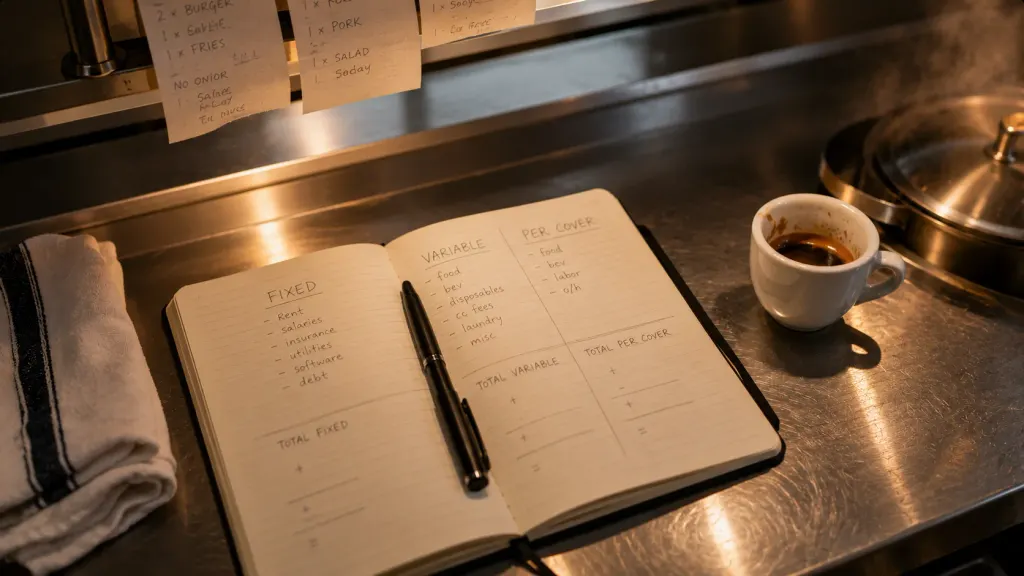
Break-even number of covers per month:
₴285,000 ÷ ₴226 = 1,261 covers/month
Per operating day (the restaurant is open 26 days/month — closed Mondays and 3 holidays):
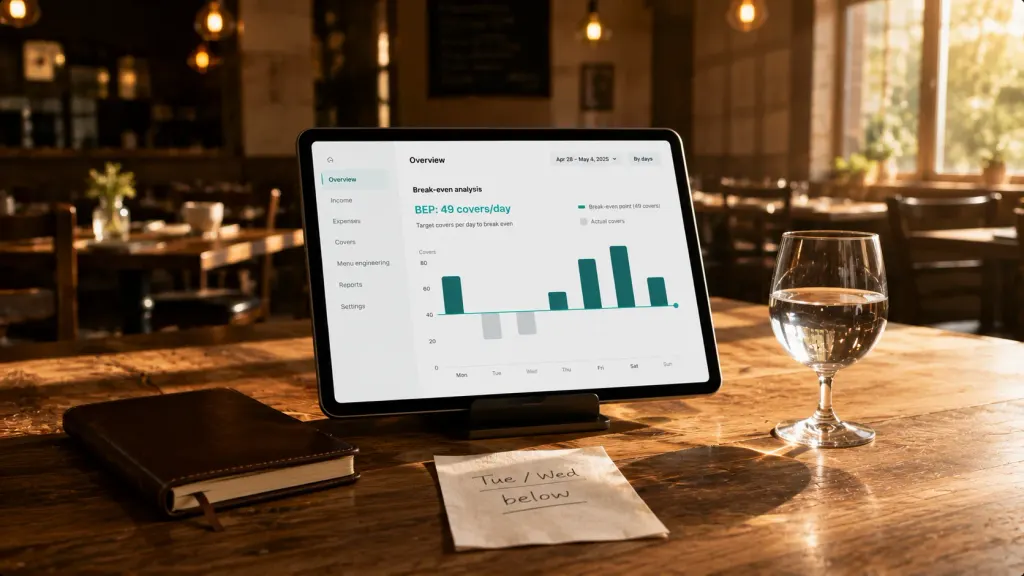
1,261 ÷ 26 = 49 covers per day on average
Now the owner had a number he could compare reality against. Across the previous month, the breakdown was sobering:
- Fridays and Saturdays: averaged 78 covers/day → safely above break-even
- Sundays: 52 covers/day → barely above
- Tuesdays and Wednesdays: 31 covers/day → 18 covers below break-even, every week
- Thursdays: 44 covers/day → 5 covers below break-even
Over a month, that translated to roughly 140 covers below break-even on slow days — exactly the gap that produced the ₴47,000 loss. The Fridays didn't lose. The Saturdays didn't lose. Tuesday, Wednesday, and Thursday lunchtimes lost the entire month for them.
5 Mistakes Restaurant Owners Make With Break-Even
In dozens of conversations with Ukrainian restaurant owners, the same five mistakes show up over and over.
One. Confusing food cost with break-even. "Our food cost is 32%" is not the same as "we break even at 32% of revenue." Food cost is just one variable line. Fixed costs (rent, salaries, utilities) are the much bigger half of the equation — and they don't shrink when the room is empty.
Two. Using the wrong average check. Most owners cite their dinner average check ("our avg is ₴420"), but apply it to lunch covers too. Lunch averages are usually 30–40% lower than dinner. Calculating break-even on dinner check while half your covers come at lunch hides a daily-loss pattern.
Three. Hiding fixed costs inside "variable." Utilities have a fixed baseline and a variable portion. Salaries are mostly fixed (you pay servers whether the room is empty or full). Treating utilities as 100% variable, or salaries as scalable with traffic, dramatically lowers the calculated break-even number — and turns silent losses into invisible ones.
Four. Forgetting the owner's salary. If the owner takes ₴40,000/month as a draw, that's a fixed cost. If they "skip" their own salary in the BEP calculation, they get a flattering number that doesn't reflect the actual money the business needs to produce.
Five. Calculating once, then forgetting. Break-even is not a one-time exercise. Rent rises. Suppliers raise prices. Menu mix shifts. A restaurant that calculated break-even at opening and never updated it is operating on data that's 12–18 months out of date — and probably 8–15% too low.
The owner of this restaurant had made four of these five mistakes simultaneously. None of them looked like errors — each looked like a reasonable shortcut. Together they hid roughly 23% of the real break-even number.
What Changed Once He Knew the Number
The owner did not blow up the restaurant. He did not change the concept. He made four small, structural changes within 90 days.
One. He launched a Tuesday-Thursday business lunch combo. Soup + main + drink for ₴220. Lower margin per cover (₴138), but the goal was filling seats during the slow window. Result: weekday lunch covers rose from 31/day to 52/day. Even at lower margin, the volume turned those days from −₴4,000/week to +₴2,000/week.
Two. He raised dinner check by upselling, not by raising prices. Trained servers to suggest a starter or a side with every order. Average dinner check went from ₴420 to ₴468 over six weeks — without changing the menu prices themselves.
Three. He closed Mondays permanently. The restaurant had been open seven days, but Mondays had historically been the worst day. Closing Monday saved ₴12,000/month in fixed costs (utilities, partial salaries) and zero meaningful revenue.
Four. He rebuilt the BEP every month, not yearly. Each first Sunday of the month, the owner spends 30 minutes updating the BEP calculation with the previous month's actual numbers. It is now part of his closing-the-month ritual — like reviewing the wine list.
Three months after the night he stared at the ₴47K loss, the same restaurant produced ₴62,000 in net profit. Same room. Same menu. Same regulars. The difference was that the owner now knew which days, which menu items, and which hours actually produced profit — and which ones quietly subsidized loss.
"I didn't realize how much of my decision-making was based on feeling. The room felt full. The bookings felt healthy. The Tuesdays felt acceptable. The numbers said otherwise on all three."
The Break-Even Formula, Cleanly
For any restaurant, the math reduces to:
Break-even covers/month = Total Fixed Costs ÷ (Average Check − Variable Cost per Cover)
To do this honestly, three disciplines:
- List every fixed cost line, even the small ones. Subscriptions, music license, alarm system, equipment leases. They add up to 5–10% of total fixed costs that owners regularly forget.
- Use a weighted average check that reflects your actual lunch/dinner/takeout mix — not just the dinner figure.
- Update monthly. Suppliers raise prices quietly. Wages rise. The BEP number from January is wrong by April.
For a restaurant on a service-led concept, the BEP usually lands between 40 and 65 covers per operating day for a 50-seat room. Outside that band, either fixed costs are unsustainable for the size of the space, or pricing is leaving real money on the table.
Topic foundation: Financial Model for a Small Business: What It Is and How to Build One
Industry cases
Share valuable content — become a source of insights



Frequently Asked Questions
What if my restaurant has multiple revenue streams (in-house + delivery + catering)?

Calculate BEP separately for each stream. Delivery has different variable costs (platform commissions of 18–30% are a huge variable line) and different fixed cost allocations. Many restaurants discover delivery looks profitable in revenue but actually loses money once platform fees, packaging, and the kitchen's time are honestly counted.
Does my break-even number account for staff bonuses or owner profit?
The BEP we describe is the break-even — zero profit, zero loss. To target a desired profit, add it to fixed costs. If the owner wants ₴60K/month of profit on top of their salary, treat it like another fixed cost in the formula. The new "covers needed" is your target — not just survival.
How do I separate fixed and variable utilities?
Look at your utility bills for your slowest month (often February or January) vs your busiest. The slow-month amount is roughly the fixed baseline. The difference between busy and slow months, divided by the cover difference, gives you a per-cover utility variable cost. It's usually small (₴2–6 per cover) but real.
Is BEP useful for a new restaurant that hasn't opened yet?
Yes, critically. Before signing the lease, project fixed costs at the proposed location, estimate a realistic average check for your concept and neighborhood, estimate variable cost per cover. If the resulting break-even covers/day is more than 60–70% of your seating capacity × turnover, the concept is high-risk. Most restaurant failures are visible in this calculation before the first dish is plated.
How often should I recalculate?
At minimum every quarter. Better: every month, as part of closing the month. Best: every time you change a menu, change a supplier, or renew a lease — recalculate the same day.
Can I do this in a spreadsheet?
Yes. A simple sheet with two tabs (fixed costs, variable costs per cover) and one formula is enough. The bottleneck is not the tool — it is whether the owner actually keeps the numbers current. The owners who do this best automate the fixed-cost line from bank feeds, so the BEP refreshes itself with real spending data.
Any questions left?
We are ready to answer them.


Finmap support