


Table of Contents

888

7 min

08.07.2026
Thirty Weddings and a Second Try: How an Event Agency Finally Launched Its Accounting

Julia Polinyak
Financial expert at Finmap
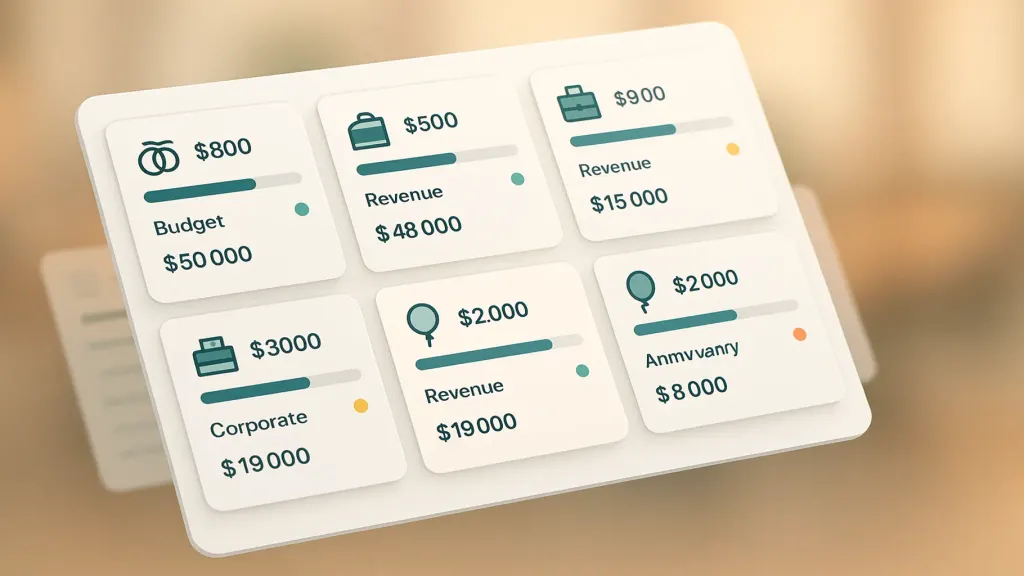
In a full-cycle event business, thirty weddings, anniversaries and corporate events live at once — each at a different stage. One just arrived as an inquiry: "we have a wedding in July, can you organize it?" A second has already received a 30% prepayment. On a third, decor installation is underway. A fourth wrapped up last week, but the client still hasn't paid the balance. A fifth is an event abroad, paid in euros through the European company.
All thirty exist within a single financial loop. Because the money is shared. The team is shared. The current bank account is shared. And here begins the classic story of a service business: project funds bleed into one another, like water in connected vessels.
"The money often gets mixed up. Somewhere we're waiting for a payment, but we need to book something — so we take money from another project, then somehow try to record it, but you can't record everything."
— Olena, co-owner of a full-cycle event agency
This wasn't Olena's first time coming to us for a consultation. The first Finmap purchase in her story happened a year before the moment we sat down to talk a second time. And the most important thing in this story isn't the switch itself — it's the pause between the first and the second attempt.
A team of five and the geography of two markets
Olena's business is structured for the realities of Ukrainian service entrepreneurship circa 2025-2026. Two Ukrainian sole proprietorships (FOP), a European company for foreign events. The team — about five people who handle financial management. The rest are contractors: decorators, florists, photographers, caterers, hosts.
Turnover is in the range of 20–30 thousand dollars a month. This isn't a large corporate client. It's the classic ambitious Ukrainian small business — one that already feels Excel spreadsheets can no longer hold it, but hasn't yet found what to replace them with.
"I have a pile of spreadsheets, it's all manual work, basically. A lot of time and manual work. When you're in the middle of organizing an event, there's really no time for it. To record all of this in spreadsheets."
Before the switch, Olena's accounting looked like this. A separate Google Sheet for each large order. A consolidated table for the whole month. Separate tabs for FOP-1, FOP-2 and the European company. Project managers who asked every single day "where does this payment go?" and "what's the balance on the bookings?"
It worked. As long as there were ten projects. When it became twenty — the numbers started disappearing. When it became thirty — it stopped being clear whether the company was profitable at all.
The second pain point: when the managers are the bottleneck
There's a paradox in a service business. The owner delegates projects to the team in order to scale. But they don't delegate the financial accounting, because the team has no access. As a result, the owner becomes the very bottleneck the team was built to avoid.
"It's important that a manager can also log in and enter things there. Because if not, then it makes no sense — it'll be double the work."
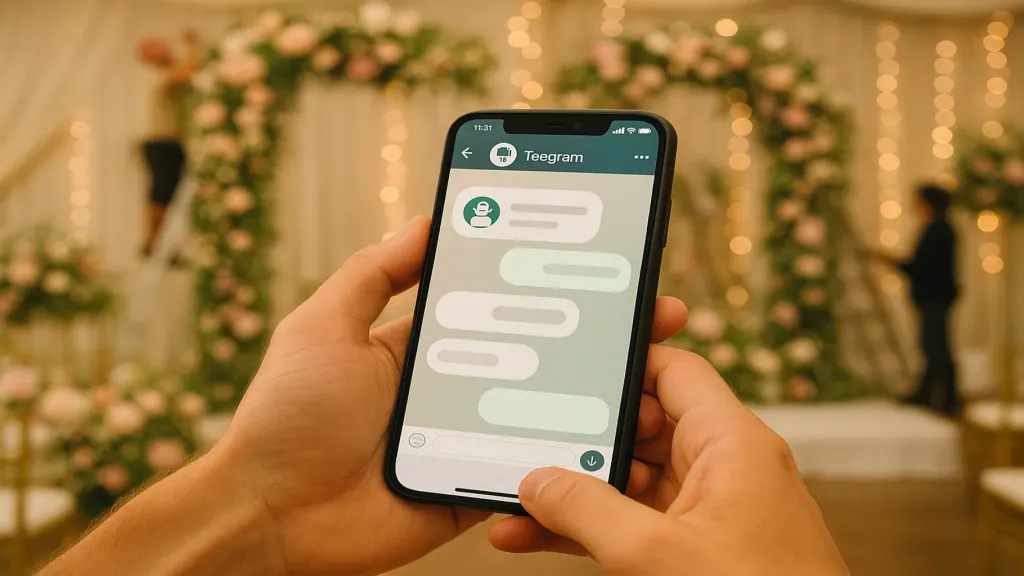
Olena saw this problem clearly. If the new software were accessible only to her, then the managers would keep sending "paid 5000 UAH to the florist" over Telegram, and she'd spend her evenings transferring it into the system. No time saved. Excel spreadsheets would simply become Finmap — and the manual-work problem would remain.
The first attempt: when you buy it but never figure it out
This is a moment Olena tells with a certain sadness — but without getting defensive. Because it's a moment that happens to most users of accounting and finance software, the one nobody likes to admit publicly.
"We bought it, but we never figured out the functionality. So we basically didn't use it for a single day. I thought I'd log in and quickly understand everything. But it didn't work out that way for me."
What happened? Several factors added up:
The first — Olena came in without a clear understanding of exactly what result she wanted. That is, she wanted to "put the finances in order" — but that's an abstraction. Finmap has an enormous amount of functionality, and without a concrete use case you can spend hours clicking through the interface and never figure out where to start your scenario.
The second — they didn't set aside time for the launch. They bought it, activated it, opened it — and immediately moved on to the next operational task. Starting your accounting is an activity that requires 2-3 hours of focused work. If those hours aren't in the calendar, the launch won't happen.
The third — they started with the hardest part. They tried to immediately "migrate the past three months" — and that's a task that makes any beginner give up. Instead of starting with something simple — entering ten of today's transactions and seeing how they look.
The cycle ended predictably: Olena would open Finmap, not understand exactly where to click for her specific question, close it, and go back to Google Sheets. A week later — another attempt. A month later — giving up.
This isn't a product bug. It's the bug of a lack of preparation for the launch.
The second attempt: what they did differently
When Olena came back to us a year later, the business picture had changed. The European company is actively working — and Google Sheets can no longer handle multi-currency accounting. The team has grown — and two new managers are already refusing to enter data "manually into a shared spreadsheet." The overall rating Olena gave her business's financial setup at the start of the conversation — "3 out of 10."
"Here we need to figure out the functionality. If we figure it out and understand that we need this..."
The second attempt went differently because of one step: a scenario.
Instead of "I'll figure out Finmap" — a concrete list: "I want to see the profit per event, I want to delegate accounting to two managers, I want to track cash through a Telegram bot, I want to see whether the European company is in the plus or the minus." Six concrete tasks — and for each there's already a known path through the system.
Instead of "I'll log in and take a look" — an hour and a half of work with a Finmap manager on a demo, where the categories, projects and roles were already set up. The outcome — not "still need to figure it out," but a structure ready to launch.
Instead of "I'll migrate the history" — "I start from today and move forward." Clean. Without the ballast of the past three months.
What changed in the numbers
Two months after the second attempt, Olena sent us a few of her own observations.
| Metric | Before the switch | After 60 days |
|---|---|---|
| Time on the weekly financial summary | 4 hours | 30 minutes |
| Managers with access to their own projects | 0 | 3 |
| Double data entry | every day | almost gone |
| Cash expenses in the system | 0% | 95% (via Telegram bot) |
| "Where does this payment go?" questions to Olena | 8-12 a day | 1-2 a day |
| Margin accuracy per event | ±20% | ±3% |
Most importantly — Olena now opens the app not in the evening to figure out "where the money is," but in the middle of the workday, before making a decision. For example — whether to accept a low-margin order just to "fill an empty slot in June." Now she sees the real profitability by month, by season, by type of event — and the decision is made not on intuition.
Lessons for those standing at a crossroads
Olena's story matters not only as a specific case — but as an illustration of one of the most common patterns in switching to new accounting software.
The first lesson. Buying accounting software doesn't mean you've started using it. A year and dozens of repeat attempts can pass between those two events. Discipline at launch matters more than the choice of service.
The second lesson. The team is the key. If the managers don't enter data, the owner becomes the bottleneck — and the whole system boils down to the same thing that was in Excel. Team access isn't an option, it's a must-have.
The third lesson. Cash isn't "a small part of accounting." In the event business it's 30-40% of operations. If it stays outside the system — nothing you see in the report is true. A Telegram bot as a channel for frontline staff is an underrated lifesaver.
The fourth lesson. A European and a Ukrainian company in one account isn't "complicated." It's a normal business scenario for 2026. If the software can't do it — you don't have management accounting, you only have partial visibility.
Olena's closing reaction: "Clear. A hundred percent clear. Yes, yes. Okay, good. Thank you so much for the presentation, for the explanation."
This isn't a wow-moment reaction. It's the reaction of a decision. A calm, already-present readiness to come back to Finmap — this time with a concrete scenario, a concrete schedule, a concrete team. And that's the moment when accounting starts to work.
This case was prepared based on a real consultation with the co-owner of an event agency. The details were agreed with the client before publication. The managers' names have been changed.
🎯 If you too once tried to implement accounting software and gave up — that's normal. In most cases the issue isn't the product, it's the launch scenario. Book a free consultation, and together we'll build a concrete plan where your managers and your business cycle are accounted for from day one. Book now →
Read also
Share valuable content — become a source of insights




Frequently Asked Questions
Why did the first attempt to adopt accounting fail?

Not because of the product, but because of a lack of preparation: there was no clear scenario ("what result do I want"), they didn't set aside 2-3 hours for the launch, and they started with the hardest part — migrating three months of history instead of a few of today's transactions.
What did they do differently on the second attempt?
They started with a scenario: a concrete list of six tasks, an hour and a half of demo with a Finmap manager who had categories, projects and roles already set up, and a launch "from today forward" without migrating the past.
Why give managers access to the accounting?
So the owner doesn't become the bottleneck. If only the owner enters data, transferring Telegram messages in the evenings, there's no time saved — Excel simply becomes Finmap. Team access is a must-have.
How do you track cash in an event business?
Through a Telegram bot. In this niche, cash is 30-40% of operations. Frontline staff enter expenses straight from their phones, and the data flows into the system automatically — without this, the reports aren't true.
Can you run a Ukrainian and a European company in one account?
Yes, including multi-currency accounting. It's a normal business scenario for 2026, and it's exactly what gives full visibility instead of partial visibility.
Any questions left?
We are ready to answer them.


Finmap support