

Table of Contents

105

9 min

31.07.2025
From Excel to Full Control: KLEI’s Financial Transformation

Kateryna Gulchenko
Senior Customer Support Manager
A creative product, loyal customers, and a dedicated team — that’s enough to inspire you. But not enough to scale.
Without structured financial management, it’s impossible to make informed decisions: where to invest, what to develop, what to let go of.
KLEI was printing stickers for major clients, selling abroad, getting great feedback — doing everything except understanding where it was actually making a profit and where it was losing money.
With the bank balance close to zero and orders growing, one question came up: are we really profitable — or just very busy?
KLEI: built with purpose, focused on growth
KLEI is a Ukrainian brand of durable stickers, founded in 2017. Instead of mass production, it focused on quality and value. The company started with a lean 10-person team and the spirit of a family business.

Thanks to the founder Mykyta Anikanov’s creative and practical approach, the business gained momentum quickly. Clients like Reface, Wix, Banda Agency, Wikimedia, and others soon followed.
When finances become the bottleneck
At first glance, everything at KLEI looked great: steady orders, international clients, a quality product. People in Canada were placing orders and willing to wait weeks for delivery — with no extra marketing.
But in 2021, growth hit an invisible ceiling. Mykyta realized the problem was financial. There was no clear understanding of how much profit the business was actually making. Some periods were profitable; others ended in the red. And it was hard to explain why.
The reasons:
- Cash gaps caused by mixed payment methods.
- Unclear costs due to the wide variety of orders.
- No single system showing where money was being lost.
At the time, KLEI was producing a very wide range of orders — from 1 to 10,000 stickers, die-cut stickers, sets, and corporate orders.
But there was no analysis showing what was profitable and what was dragging the business down. To finally get the finances in order, Mykyta decided to implement Finmap.
I want to build a solid company that won’t fall apart in the first crisis. That takes time. And finances have always been my weak spot — they were really difficult for me. — Mykyta Anikanov, founder of KLEI

From spreadsheets to a system: what changed with Finmap
In the summer of 2021, Mykyta started testing Finmap. By early autumn, as the new business season began, the company had fully implemented the tool: it centralized financial management and retired the spreadsheets.
The tools and decisions that made a difference from the start:
- Centralizing data in one place
Before Finmap, management was fragmented: separate accounts, spreadsheets, notes kept in someone’s head. It created constant stress: will the numbers work out? Will we run out of money? Did we remember everything?
Before, I’d be calm for two days and stressed for two weeks. Now it’s the opposite: I’m calm all the time. — Mykyta Anikanov, founder of KLEI
- Tracking accounts receivable
KLEI used to work without prepayment — to speed up orders and avoid losing sales. Late payments from clients seemed like exceptions, but they caused cash gaps.
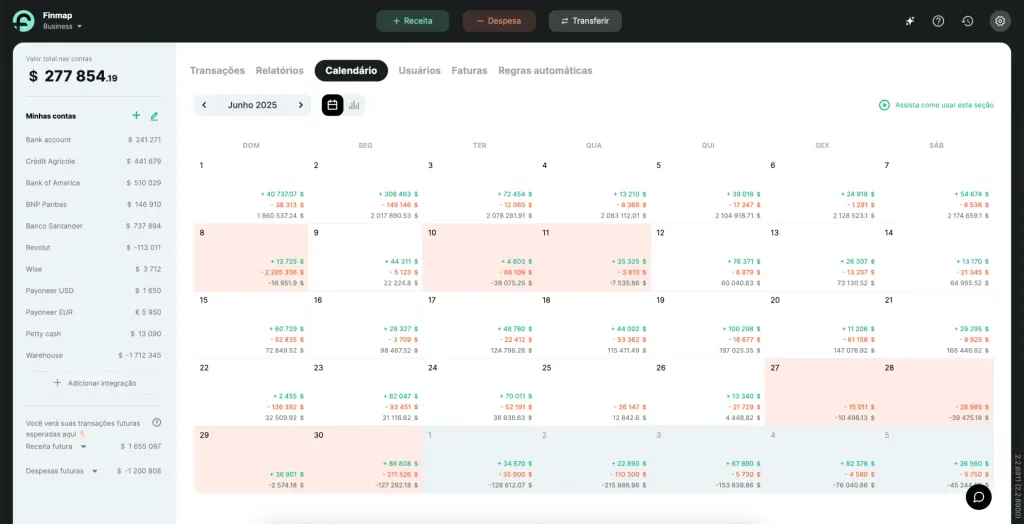
The money was supposed to arrive, but it was delayed — and that slowed everything down. With Accounts Receivable reports and the Payment Calendar, the company identified this weak spot and took action.
When I started using financial management, I saw in Finmap that we really did have overdue payments. So we decided: from now on, prepayment only. — Mykyta Anikanov, founder of KLEI
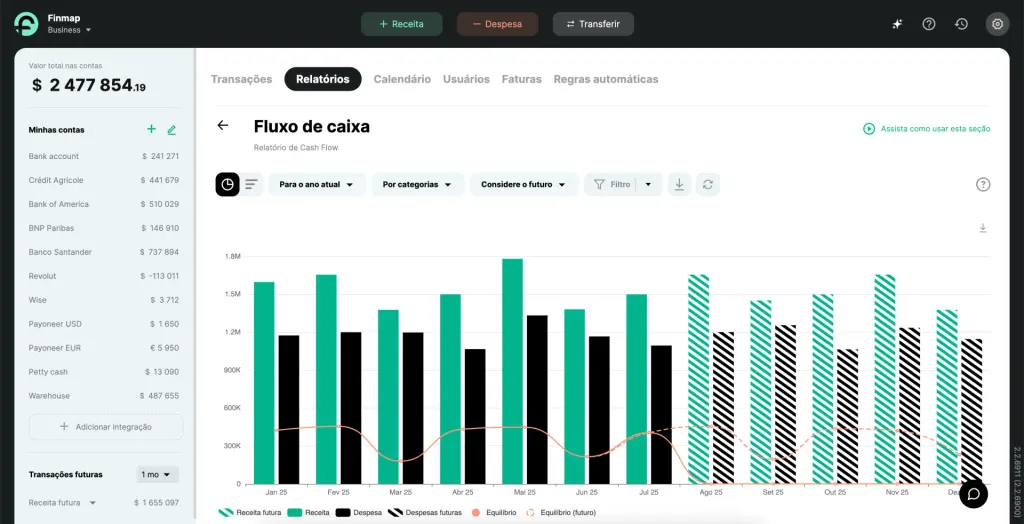
- Full control of balances and cash flow
Finmap made it possible to see the financial situation in real time: current balance, upcoming payments, what’s going to happen tomorrow. It removed the constant anxiety of trying to “feel” the cash flow. Now there are numbers, charts, and dates.
I open Finmap, check the balance and upcoming expenses, see that we’re in the black — and move on. Before, I had to open three accounts, spreadsheets, notes — and still feel unsure. — Mykyta Anikanov, founder of KLEI
- Categorizing orders
For deeper analysis, they created categories in Finmap: individual stickers and sets. This made it possible to see the profitability of each product type — not just the overall picture. As a result, it became clear what was worth scaling and what needed to be reviewed.
Before, we only saw the total: money came in, so everything looked fine. But when we started splitting it by order type, we saw that not everything was equally profitable. — Mykyta Anikanov, founder of KLEI
- Improving financial literacy
Finances had always been a weak spot for Mykyta — the topic made him tense. So alongside Finmap, he took the “Business Money” course. It helped him delegate financial management and better understand how the financial system works.
Before, I was always wondering: will it work out? Will the numbers add up? Now I understand where those questions come from — and I know how to answer them. — Mykyta Anikanov, founder of KLEI
The combination of automation and personal involvement brought the most important thing: confidence. Mykyta no longer relies on intuition — he makes decisions based on reports and real data.
It changed not only the finances, but the way the business is managed.
A financial system as the foundation for growth
After setting up Finmap and delegating the controls, the tool became a stable support system. All the essential data is in one place, well organized, and accessible at any time.
That freed up time for what matters most: growth, strategic planning, and expansion.
In 2025, KLEI reached a new level of scale:
- It attracted investment.
- It started building its own factory.
- It increased the number of bank accounts.
- It launched a new financial structure aligned with its new stage of growth.
This growth was only possible because a working management foundation was already in place — they didn’t have to start from scratch.
When you know your numbers, you know where you’re going
The next step: finish the factory, stabilize processes, and prepare to enter new markets. Finmap remains the central tool — providing structure, control, and a foundation for every new stage.
In the end, Mykyta sums it up with one simple, practical piece of advice:
Set aside time for finances every week. Even 30 minutes reviewing the numbers is worth more than guesswork. The owner needs to understand what each number means — and make decisions based on facts.
What to take from KLEI’s story for your own business
KLEI’s story may feel familiar: a validated product, loyal customers, but internally — unclear expenses, cash gaps, and the feeling that something doesn’t add up.
But they stopped in time, looked at their finances, and saw the reality. That gave them the foundation to grow, attract investment, and gain confidence.
If you’re reading this, you’re already on the path to financial clarity.
A few lessons from KLEI — so you don’t have to find your way in the dark:
- No system = no control.
- Profit “by feel” = risk of a cash shortfall.
- Financial order = not Excel, but automation, habit, and the right tool.
Do what KLEI did: don’t wait for a crisis to get your house in order.
Try Finmap and see how your business changes when your finances become clear.
Frequently Asked Questions
1. Why did a company with steady orders have financial problems?
Because orders ≠ profit. KLEI didn’t have a system showing what was actually making money and what was just tying up capital. That created cash gaps and hidden costs.
2. What action brings immediate results in finances, in any industry?
Centralize all accounts, income, and expenses in one system — and check it every day. It reduces chaos, creates clarity, and prevents things from being forgotten. For KLEI, it was the turning point. And it works for any type of business.
3. Is Finmap suitable for small businesses or creative projects?
Yes. KLEI is a small business with a creative product. That’s exactly why they used to rely more on intuition. Finmap lets you stay creative — while keeping a clear view of your money.
4. What if I don’t understand finance at all?
Mykyta wasn’t an expert either — and he says so openly. He delegated the day-to-day work, took a basic course, and learned to read the reports. Finmap is built for owners who want clarity without getting lost in daily admin.
5. What results did KLEI get after organizing its finances?
It attracted investment, started its own production, created a new financial structure, and raised the level of management. All based on data — not guesswork.
Share valuable content — become a source of insights