

Table of Contents

268

7 min

27.07.2026
How to Set a Price So You Don't Work at a Loss

Julia Polinyak
Financial expert at Finmap
The question "how much should I charge for this" is one owners answer fast. Glanced at the competitors, added a bit on top of cost, rounded to a nice number. There's a price, sales are coming in, everybody's happy.
And then the month closes at zero or in the red, even though sales were strong. The reason is almost always the same: the price didn't include all the costs. You counted the materials and forgot the rest — and every sale quietly took money instead of bringing it in.
A price isn't "how much I don't mind charging" or "whatever the guy next door charges." It's a number that has to cover every cost this product carries and still leave a profit. To get there, you first have to honestly work out what the product actually costs you.
Why pricing "like the competitors" is dangerous
You don't know what's inside someone else's price. Maybe the competitor has cheaper rent, their own workshop, or maybe they're also running at a loss and about to shut down. Anchoring to their number means setting your own price blind.
| How the price gets set | How it ends |
|---|---|
| "Like the competitors" | You copy a cost structure you can't see |
| "Cost plus 30%" | Half the costs never made it into that "cost" |
| "The client won't pay more" | Fear of raising the price beats the math |
In all three cases the price rests on a feeling, not a number. While sales are low, it slides by. But as volume grows, every loss-making sale multiplies, and "lots of orders" turns into "lots of work for free."
"For years I was proud of my low prices and a fully booked schedule. When I finally added up everything that goes into each order, it turned out that on half of them I was simply giving my work away for free."
What actually goes into a price
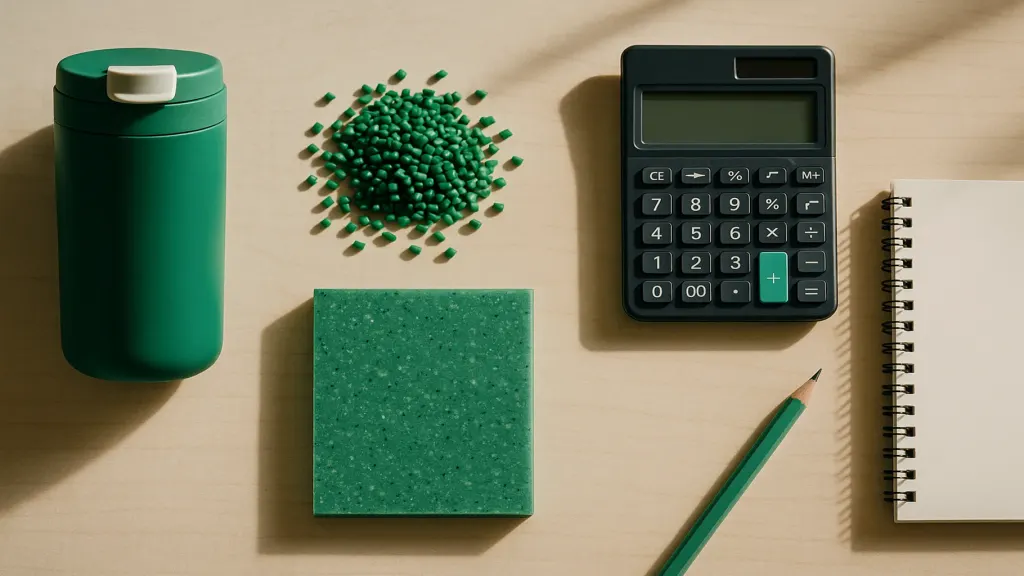
For a price not to be a loss-maker, it has to carry not just the obvious direct cost, but every expense that this product drags along with it:
- Direct costs — materials, components, and the labor the product eats up directly.
- A share of fixed costs — rent, salaries, utilities, subscriptions. They're always there, and every product has to carry its piece.
- Sales taxes — the part that goes to the state, not to you.
- Profit — not "if anything's left," but a number built in from the start, the reason you're doing this at all.
A price that covers only direct costs is not a break-even price. Break-even is reached when the share of fixed costs is covered too. Anything below that is a sale in the red, even if "the materials paid for themselves."
What it looks like in numbers
One service, two ways to count it. The difference is in what got included:
| The math | Price |
|---|---|
| Materials 400 + 30% on top | 520 — and it feels like a profit |
| Materials 400 + labor + share of rent + tax + profit | 820 — the real price, no loss |
Selling at 520, the owner was sure he was making 120. In reality, after labor, the share of rent, and tax, he was in the red on every single service. And the more of them he sold, the deeper into the loss he went — he just couldn't see it, because he was only looking at the materials.
"The strangest part was realizing that my most popular product was the most unprofitable one. People bought it precisely because I'd priced it below my own cost."
What to do about it
The right price rarely means "raise everything and scare off the clients." More often it's targeted decisions based on a number:
- Calculate the full cost of each product — with its share of fixed costs, not just the materials.
- Raise the price where it's below cost — even a few percent often wipes out the loss.
- Drop or rework the loss-making items that hang around "for the range."
- Build profit into the price from the start, instead of hoping it'll "be left over" at the end of the month.

Where a financial expert comes in
Working out the full cost — spreading rent, salaries, and taxes across your products — is hard to do on your own when you're in production or with clients all day. That's exactly where a financial expert helps: they pull all your costs together and show you which price is genuinely break-even and where you're working at a loss.
For that kind of calculation to be possible, the costs have to be gathered in one place, not scattered across the till and your head. In Finmap you can see all your business costs right next to your revenue — and then the real cost of a product can be calculated, not guessed.
📌 Find out which of your products are selling at a loss. Book a free financial diagnostic with Finmap — a financial expert will break down the full cost and show you where the price is below your expenses. No strings attached.
Share valuable content — become a source of insights



Frequently asked questions
What's included in a product's full cost?

Direct costs (materials, labor), a share of fixed costs (rent, salaries, utilities), sales taxes — and built-in profit. If you count only the materials, the price almost always ends up loss-making.
Why can't I just go by what the competitors charge?
Because you don't know what's inside their price: they may have different rent, their own production, or they may be running at a loss themselves. A competitor's price is a market reference point, but no substitute for your own math.
How do I know I'm selling at a loss if there's money in the account?
The money can come from turnover and prepayments, not from profit. A loss-making sale only shows up once you calculate a product's full cost and compare it to the price. The till won't reveal it.
I'm afraid to raise prices — I'll lose clients. What do I do?
Start with the items where you're clearly in the red — there, a raise only removes the loss. Often a few percent is enough, and clients don't even notice. Losing clients over a loss-making price is worse than losing a few over a fair one.
Do I need to calculate the cost of every single product?
Start with the most popular and highest-volume ones — that's where the real money hides. Rare items can wait; the main thing is to first make sure your bestsellers aren't in the red.
Any questions left?
We are ready to answer them.


Finmap support