


Table of Contents

340

6 min

10.08.2026
Accounting for a Creative Studio: Projects, Contractors, Fees

Olena Smolikova
Financial expert at Finmap
A creative studio lives on projects: a shoot, a design job, a production, a campaign. Money comes in big, uneven lumps, much of the work is often done by contractors and freelancers, and fees and advances get tangled up with each other. As a result, the owner sees turnover but has no idea which project actually earned money and which one ate it all on contractors.
Accounting in a studio isn't bureaucracy — it's a way to see the profit on every project after all the fees. Let's break down how to set it up.
Why a studio is trickier than it looks
Three things complicate the picture in a studio at once: projects of wildly different sizes, lots of outside contractors, and advances. A 300,000 project budget might leave the studio with 40 if half went to production and freelancers — and that's fine, as long as you can see it. The problem starts when you can't.
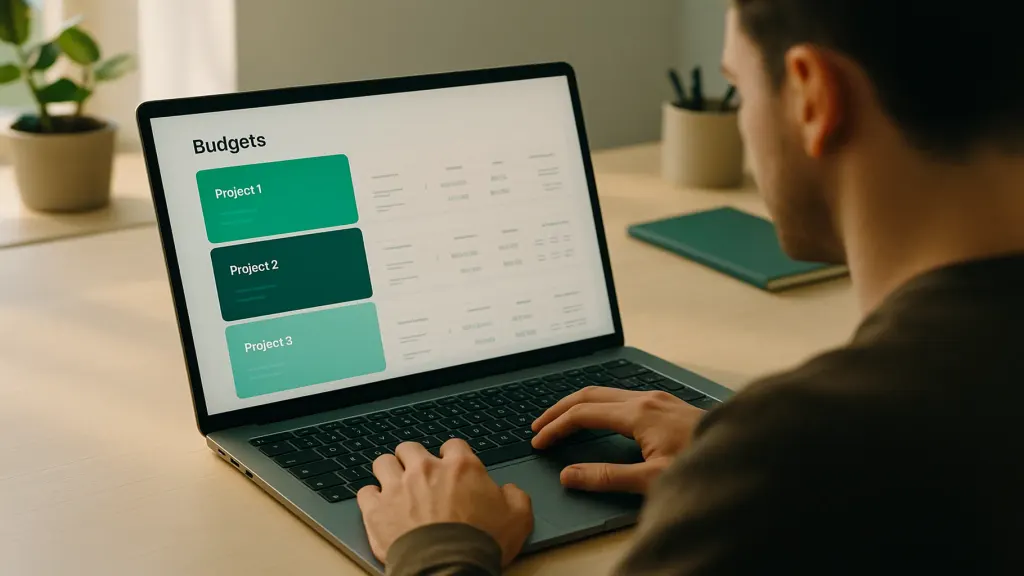
Step 1. Every project is its own "bucket"
Set up each project separately and tie all the money to it: the client's advance and final payment, contractor fees, equipment rental, consumables. That gives you a P&L per project — you see the result of each one, not just an "overall plus." You can even check which project is genuinely profitable in 15 minutes — here's how.
Step 2. Keep fees and advances apart
A client's advance isn't your income yet — it's an obligation to do the work. A contractor's fee is a direct cost of the project, even if you'll pay it next month. If all of this sits in one stream, the project's margin is pure fantasy. Tying every amount to a project and a type (advance, payment, fee) makes the picture honest.
Step 3. Watch for cash gaps
Studios are especially prone to cash gaps: the client pays the balance after delivery, but contractors need to be paid while the work is still going. A payment calendar shows you these moments in advance — how to build one. Without it, a studio keeps dipping into its own money to carry a project across the finish line.

Where to start
Start with one thing — set up your current projects as separate buckets and, for a month, tie all the money to them. That alone will show you which projects are feeding you. For an example of how a studio recalculated its true costs and raised its prices, here's the case, and for a systematic view by client, see Management Accounting for an Agency: a View by Client.
In Finmap, projects, contractors, and advances roll up into margin automatically — try it free for 7 days.
Share valuable content — become a source of insights






Frequently asked questions
How do I account for a project with lots of contractors?

Tie every fee to the project as a direct cost — even if the payment comes later. The project margin = client payments minus all contractors and direct costs on it.
Is a client's advance income?
No, it's an obligation. It becomes income once the work is done. That's why advances are worth marking separately, so you don't overstate your profit.
How many projects should I track separately?
All the ones that noticeably move the money. Small one-offs can be grouped, but big, long projects always get their own bucket.
Any questions left?
We are ready to answer them.


Finmap support