

Contas a Receber
Contas a receber (AR) é o dinheiro que os clientes devem a você por produtos ou serviços já entregues, mas ainda não pagos.

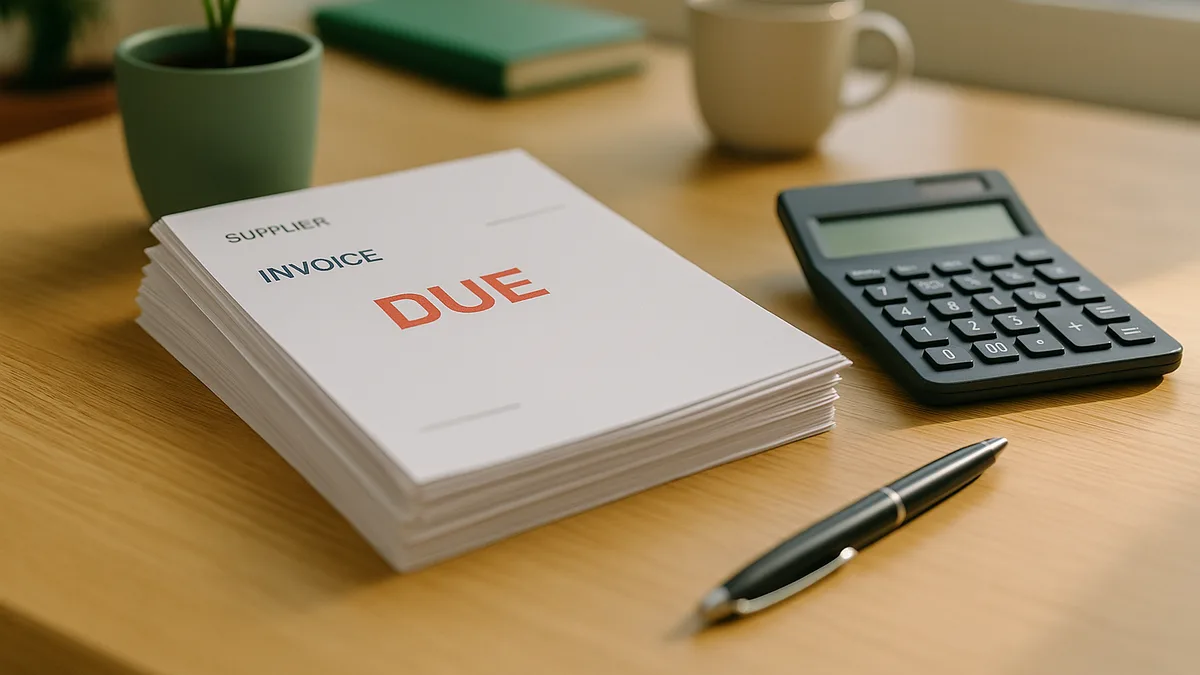
Contas a pagar (AP) é o valor que sua empresa deve a fornecedores, distribuidores ou prestadores de serviço por bens ou serviços já recebidos, mas ainda não pagos. Esse valor é registrado como um passivo no balanço patrimonial e representa obrigações de curto prazo, geralmente com vencimento entre 30 e 90 dias.
Contas a pagar são parte normal da gestão de um negócio — você recebe uma fatura, registra-a como passivo e paga depois. O intervalo de tempo entre receber a mercadoria e pagá-la é uma forma de financiamento de curto prazo. Gerenciar as contas a pagar com eficiência significa aproveitar os prazos de pagamento (por exemplo, pagar em 60 dias em vez de 30 para preservar caixa) sem prejudicar o relacionamento com fornecedores ou incorrer em multas por atraso. Um aumento repentino nas contas a pagar pode sinalizar estresse no fluxo de caixa, enquanto contas a pagar incomumente baixas podem indicar que você está pagando adiantado (usando o caixa de forma ineficiente).
Um restaurante recebe US$ 5.000 em produtos frescos de um fornecedor na terça-feira, com condições de pagamento net-30. O restaurante registra US$ 5.000 como contas a pagar nessa data. Trinta dias depois, o restaurante paga a fatura e a obrigação é quitada. Durante esses 30 dias, o restaurante usou o caixa do fornecedor — essencialmente um empréstimo gratuito e de curto prazo.
Manter as contas a pagar sob controle ajuda a otimizar o fluxo de caixa e a manter boas relações com fornecedores. O Finmap acompanha suas contas a pagar junto com a sua posição de caixa, para que você possa planejar pagamentos estrategicamente e evitar surpresas.